Many people describe the founding of the United States as one of the greatest experiments in human history. It was an attempt to place freedom at the center of society and to build institutions that would make that principle work in practice. In that sense, the claim has merit. Through this experiment, the United States became a land of opportunity for countless people, and it continues to stand as a symbol of hope for many around the world.
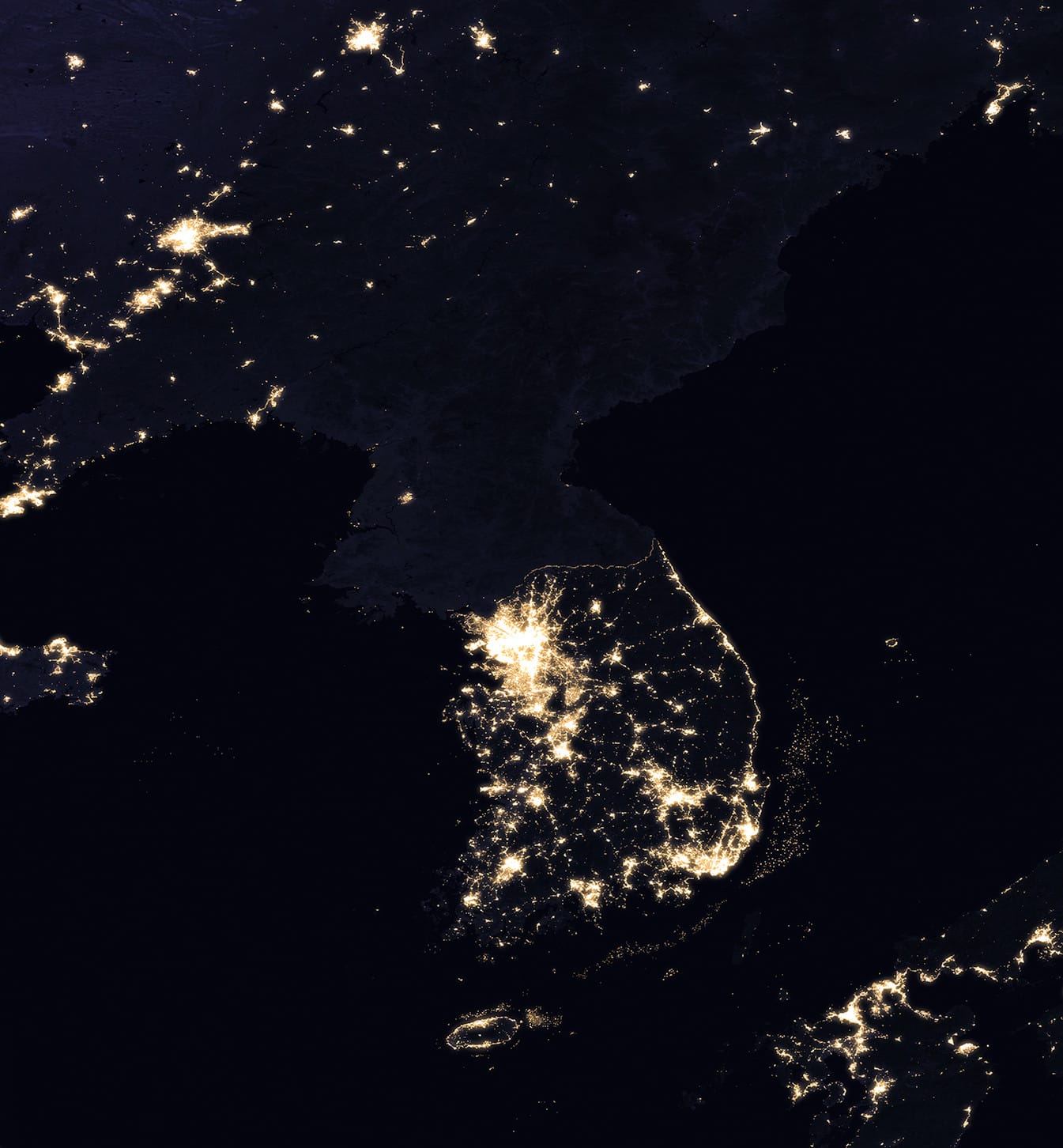
About 170 years later, another experiment began on the Korean Peninsula. After liberation, the South and the North chose different ways of organizing their economies. The South adopted a market economy, while the North chose a planned economy. The difference was clear. In a market economy, production and distribution are coordinated through the choices, competition, and exchanges of individuals and firms. In a planned economy, the state sets goals and organizes production and distribution.
What makes this case particularly close to an experiment is the clarity of the comparison. The South and the North shared the same people, language, and historical experience, and their economic starting points were not decisively different. In terms of industrial infrastructure and natural resources, the North even held certain advantages. The gap that emerged later, therefore, can reasonably be understood as the accumulated result of the economic systems they chose, rather than of external factors.
Over time, the two systems moved in different directions. In the South, the market economy supported rapid industrialization and expanded education, alongside growing engagement with the outside world. Individuals and firms could expect rewards from economic activity, and competition, investment, and innovation became engines of growth. While crises and side effects occurred, living standards rose over the long term.
In contrast, in the North, most production and distribution were placed under state control. The role of markets was reduced, and the space for competition and choice narrowed. Central planning can enable short-term mobilization, but it becomes difficult to adjust as conditions change. When decisions turn out to be wrong, correction is neither quick nor easy. Over time, inefficiencies accumulated, resource shortages deepened, living standards stagnated, and society moved toward isolation from the outside world.
This was not merely a clash of ideologies. It was a comparative case showing what different systems produce under similar conditions. The difference appears not in slogans, but in what people are able to choose, how effort is connected to outcomes, and how societies respond to change.
The results are relatively clear. Systems that institutionally protect individual choice and allow its consequences to shape economic activity have been better able to grow and adapt. Systems centered on planning and control have tended toward rigidity, closure, and long-term stagnation. This difference is visible not in abstract theory, but in the concrete conditions of everyday life.
The experiment is not yet over. The division of the Korean Peninsula continues, and the two sides are still producing different realities. Yet the experience of the past several decades points to one important conclusion. When considering which systems are more suited to human life, outcomes matter more than intentions or ideals.
The Korean Peninsula has been the place where those outcomes have been shown most clearly.